
Remote Sensing Analytics
Turning High-quality optical data into actionable insight
Remote sensing analytics enables organizations to extract meaningful information from optical data collected across complex environments. From urban infrastructure and land use mapping to environmental monitoring and change detection, advanced analytics help translate imagery and spectral measurements into decisions.
As spatial and spectral resolution continue to increase, the effectiveness of remote sensing analytics depends more than ever on the quality, consistency, and reliability of the underlying data.
What Is Remote Sensing Analytics?
Remote sensing analytics refers to the methods used to interpret optical and spectral data collected from airborne, satellite, and field-based platforms. These methods range from traditional classification techniques to modern machine learning approaches, all aimed at identifying patterns, materials, and changes that are not easily visible to the human eye.
At its core, remote sensing analytics answers practical questions such as:
- What is present on the ground
- Where boundaries and transitions occur
- How conditions change over time
- How confidently results can be interpreted
The answers depend not only on the analytic models used, but also on the quality of the data entering those models.
Why Data Quality Matters in Remote Sensing Analytics
High-resolution optical imagery captures more detail than ever before. While this creates new analytic opportunities, it also introduces challenges.
Subtle variations in illumination, surface materials, shadows, and background context can complicate interpretation. Advanced analytics are highly sensitive to these variations, particularly in complex scenes such as dense urban areas or mixed natural and built environments.
Reliable spectral and radiometric data helps reduce uncertainty by:
- Improving material discrimination
- Supporting consistent results across scenes and campaigns
- Enabling more confident model training and validation
- Reducing false detections and incomplete classifications
In short, strong analytics begin with strong measurements.
Common Applications of Remote Sensing Analytics
Built Environment and Infrastructure Analysis
Remote sensing analytics is widely used to analyze the built environment, including:
- Building footprint extraction
- Urban density and growth assessment
- Infrastructure mapping and monitoring
These applications often involve visually complex scenes where buildings vary in size, spacing, and appearance. High-quality optical data supports clearer separation between structures and surrounding materials, improving analytic outcomes.
Land Use and Land Cover Classification
Analytics applied to land use and land cover mapping support:
- Agricultural monitoring
- Vegetation and soil analysis
- Environmental baseline studies
Accurate spectral data enables more reliable classification of surfaces that may appear visually similar but differ in material composition or condition.
Environmental Monitoring and Change Detection
Remote sensing analytics plays a key role in monitoring environmental change over time, including:
- Seasonal and long-term land cover changes
- Disturbance detection
- Ecosystem monitoring and assessment
Repeatable, well-calibrated measurements are essential for distinguishing real change from acquisition variability.
Remote Sensing Analytics Methods Continue to Evolve
Remote sensing analytics increasingly incorporates advanced computational models, including machine learning and deep learning approaches. These methods are designed to handle large data volumes and complex scenes, but they also amplify the importance of consistent, high-quality input data.
Regardless of the specific analytic technique, performance is closely tied to:
- Spectral accuracy
- Radiometric stability
- Controlled acquisition conditions
Reliable data reduces uncertainty before analysis even begins.
How Spectra Vista Supports Remote Sensing Analytics
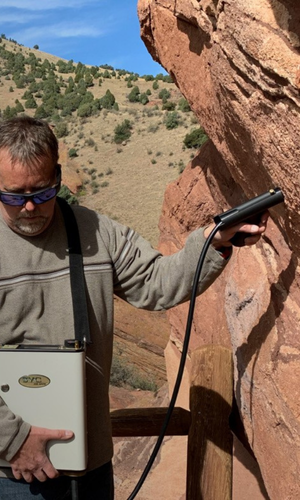
Spectra Vista instruments are used to support remote sensing analytics workflows that require accurate and repeatable optical measurements.
Spectra Vista systems help teams:
- Collect trusted spectral reference data in field and airborne environments
- Support calibration and validation of remote sensing imagery
- Improve confidence in downstream analytics and interpretation
By focusing on measurement quality and consistency, Spectra Vista enables analytics workflows that scale across applications, environments, and time.
Remote Sensing Analytics Research and Application Insights
Ongoing research in remote sensing analytics continues to highlight the importance of handling uncertainty, particularly in high-resolution imagery. Studies focused on applications such as building extraction and urban analysis reinforce a consistent theme: improved analytic results depend on both advanced methods and dependable data.
Explore related research and application examples to learn how high-quality spectral data supports modern remote sensing analytics.