Seeing Water Stress Earlier: Evaluating Spectral Sensing in Citrus Leaves
Water stress detection in citrus is the focus of this case study examining how sensing technologies can identify physiological changes before visible symptoms appear. Managing water stress in citrus production depends heavily on timing, yet traditional observation methods tend to capture stress only after it has already begun to affect plant performance.
In this context, the study evaluates whether spectral and thermal sensing techniques can provide earlier, more reliable indicators of stress at the leaf level.
Early Indicators of Water Stress in Citrus
The research compares three sensing approaches for detecting water stress in citrus plants under controlled greenhouse conditions. The goal is straightforward: determine which methods can reliably distinguish between healthy and stressed plants before visible symptoms emerge.
Three citrus cultivars were included in the study: Cleopatra mandarin (Cleo), Carrizo citrange, and Shekwasha. Each group was subjected to controlled irrigation schedules to induce varying levels of stress, ranging from well-watered controls to moderate and severe water deficit conditions.
Three sensing technologies were evaluated:
- Laser-Induced Breakdown Spectroscopy (LIBS), used to analyze elemental composition
- Visible–Near Infrared (VNIR) spectroscopy, used to measure leaf reflectance
- Thermal infrared imaging, used to estimate temperature changes associated with reduced transpiration
Comparing the Sensing Methods
LIBS: Elemental Profile Analysis
LIBS measures the elemental composition of plant tissue by analyzing light emitted from a plasma generated at the sample surface. In this study, it was used to detect changes in nutrient uptake associated with water stress.
While LIBS showed some ability to distinguish between stress levels, results were inconsistent across cultivars. Classification accuracy reached moderate levels in certain cases but fluctuated throughout the experiment. This suggests that while nutrient shifts occur under stress, they may not provide a stable early indicator across different plant types.
Thermal Imaging: Temperature as a Proxy
Thermal imaging relies on the relationship between transpiration and leaf temperature. As water stress reduces transpiration, leaf temperature increases.
The method showed potential, particularly in distinguishing severely stressed plants. However, its reliability was limited by environmental factors such as ambient temperature, soil heat, and lighting conditions. These variables introduced noise into the data, making consistent early detection difficult under non-controlled conditions.
VNIR Spectroscopy: Reflectance-Based Detection
NIR spectroscopy measures how leaves reflect light across visible and near-infrared wavelengths. These reflectance patterns shift in response to changes in water content and internal leaf structure.
Among the methods tested, VNIR spectroscopy delivered the most consistent and accurate results. Classification models built on VNIR data achieved accuracy levels exceeding 90% in distinguishing between healthy and stressed plants. This level of performance highlights the sensitivity of reflectance data to early physiological changes.
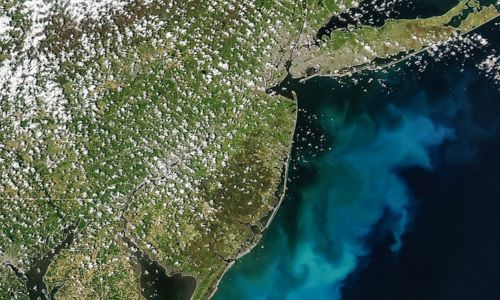
NASA overview of NDVI and vegetation analysis
Additional Remote Sensing Reference
Key Findings from the Data
Across all three sensing methods, clear differences emerged in both performance and reliability:
- VNIR spectroscopy achieved the highest classification accuracy, exceeding 93% in some cases
- LIBS demonstrated moderate performance, with accuracy levels around 80% under certain conditions
- Thermal imaging showed promise but was constrained by environmental variability
- NDVI, a commonly used vegetation index, only showed clear differentiation at later stages of stress
- Detection performance varied by cultivar, with some plants exhibiting more pronounced stress signals than others
Taken together, these results point to a consistent pattern. Methods that directly capture changes in leaf optical properties are better suited to early detection than those relying on indirect or environmentally sensitive signals.
Interpreting the Results
The study reinforces a practical distinction between detecting stress and confirming it. Visual symptoms such as wilting or discoloration represent a later stage in the stress response. By that point, physiological changes have already progressed.
VNIR spectroscopy performs well in this context because it captures subtle shifts in reflectance tied to water content, cell structure, and biochemical composition. These changes occur earlier than temperature increases detectable by thermal imaging or nutrient shifts measured through elemental analysis.
In other words, the closer a measurement is to the underlying physiological process, the more useful it becomes for early detection.
Implications for Field Applications
The ability to detect water stress earlier has direct implications for crop management. Earlier detection allows for more targeted irrigation decisions, reducing both water use and potential yield loss.
Spectral sensing methods, particularly VNIR, are also well-suited for integration into precision agriculture workflows. Field spectroradiometers can be used for ground truthing, while UAV-based systems can extend coverage to larger areas.
The study also highlights the importance of measurement quality. Reliable detection depends not only on the sensing method but on the consistency and resolution of the data collected.
The Role of Field Spectroradiometry
VNIR data in the study were collected using a field portable spectroradiometer, specifically the SVC HR-1024.
This detail is worth noting because the performance of VNIR-based detection depends heavily on the quality of spectral data. High-resolution instruments enable detection of subtle changes in reflectance that lower-resolution systems may miss.
Consistent field measurements also support downstream analysis, whether through vegetation indices like NDVI or more advanced classification models. In this sense, the instrument is not just a data collection tool, but a critical part of the analytical workflow.
Limitations and Areas for Further Study
While the results are promising, several limitations should be considered:
- Detection accuracy varied across citrus cultivars, suggesting the need for cultivar-specific models
- Performance declined once plants reached advanced stages of visible stress
- Thermal imaging was sensitive to environmental conditions, limiting its consistency
- The dataset size was relatively small, which may affect the generalizability of the findings
Future work could explore combining sensing methods to improve robustness or expanding datasets to refine classification models across a broader range of conditions.
Conclusion: From Measurement to Insight
This case study highlights the importance of early, reliable detection in managing water stress in citrus production. Among the methods evaluated, VNIR spectroscopy stands out for its ability to detect subtle physiological changes before they become visible.
The findings point to a broader takeaway. Accurate, high-quality measurements enable better interpretation, and better interpretation supports more informed decisions. In the context of agriculture, that shift from observation to insight can make a measurable difference.
Download the PDF
FAQs
What is VNIR spectroscopy and why is it effective for plant stress detection?
VNIR spectroscopy measures how leaves reflect light across visible and near-infrared wavelengths. Because water content and plant structure influence reflectance, it can detect stress-related changes before they are visible.
How early can water stress be detected using spectral methods?
Spectral methods can identify stress before visible symptoms such as wilting or discoloration appear. The study shows that measurable differences emerge during early physiological changes, prior to visual confirmation.
What is NDVI and why wasn’t it sufficient on its own?
NDVI is a vegetation index derived from spectral reflectance. While useful for general plant health monitoring, it typically reflects stress at later stages, limiting its effectiveness for early detection.
Can these methods be used in real field conditions?
Yes. VNIR spectroscopy is commonly used in field environments and can be paired with UAV-based systems for large-scale monitoring. However, environmental variability must be considered, particularly for thermal methods.
How does this apply beyond citrus crops?
The underlying principles apply broadly across plant types. Many crops exhibit similar physiological responses to water stress, making spectral sensing a versatile tool in agricultural monitoring.